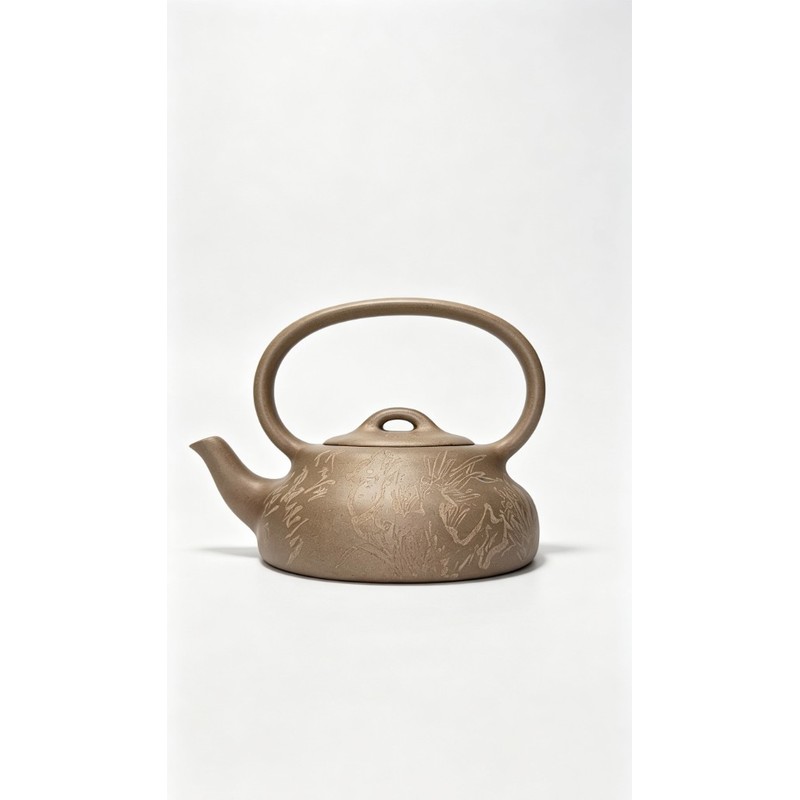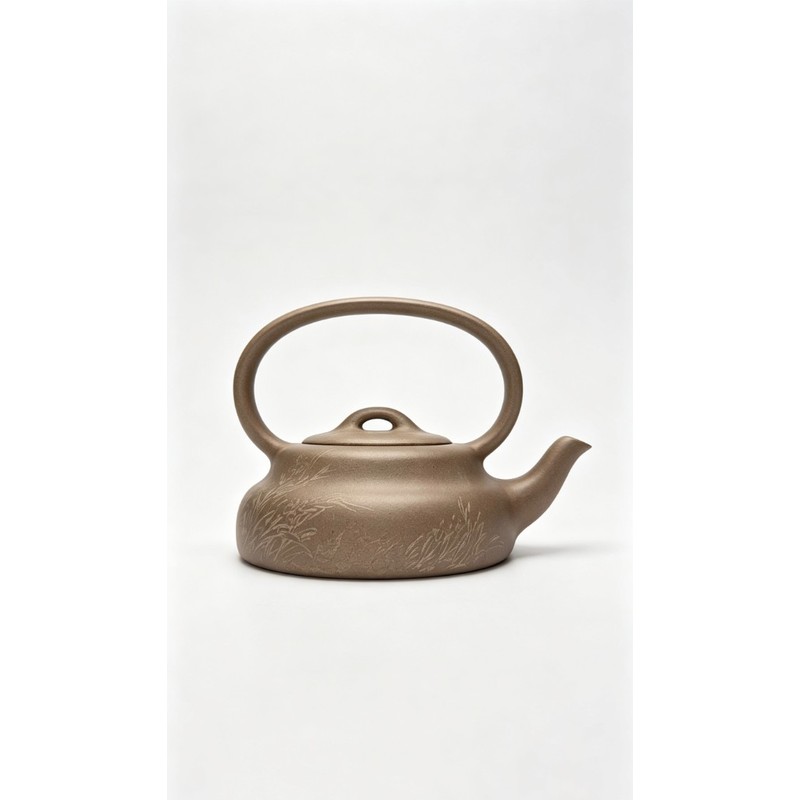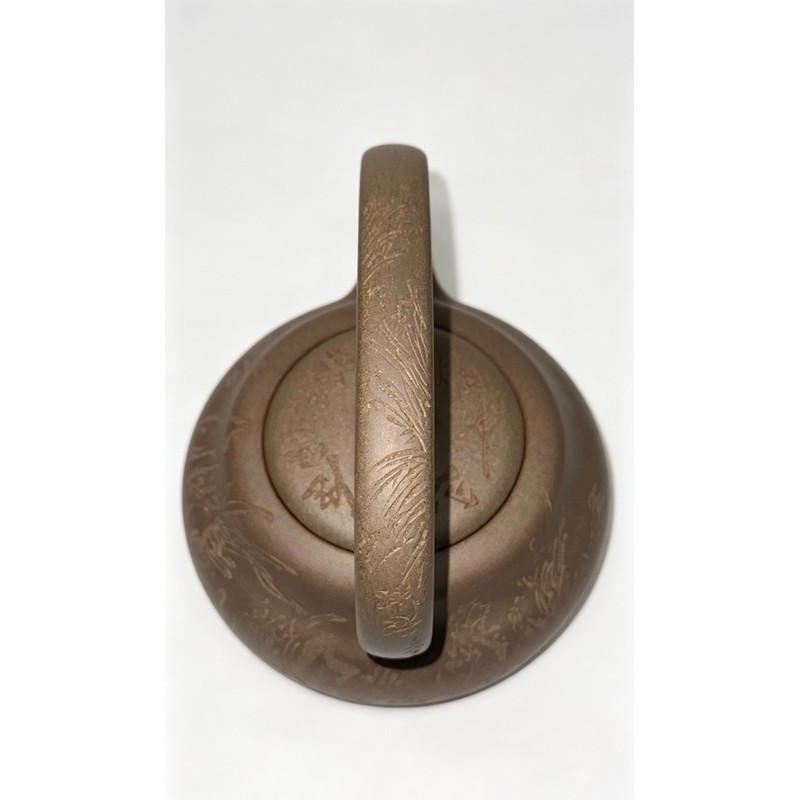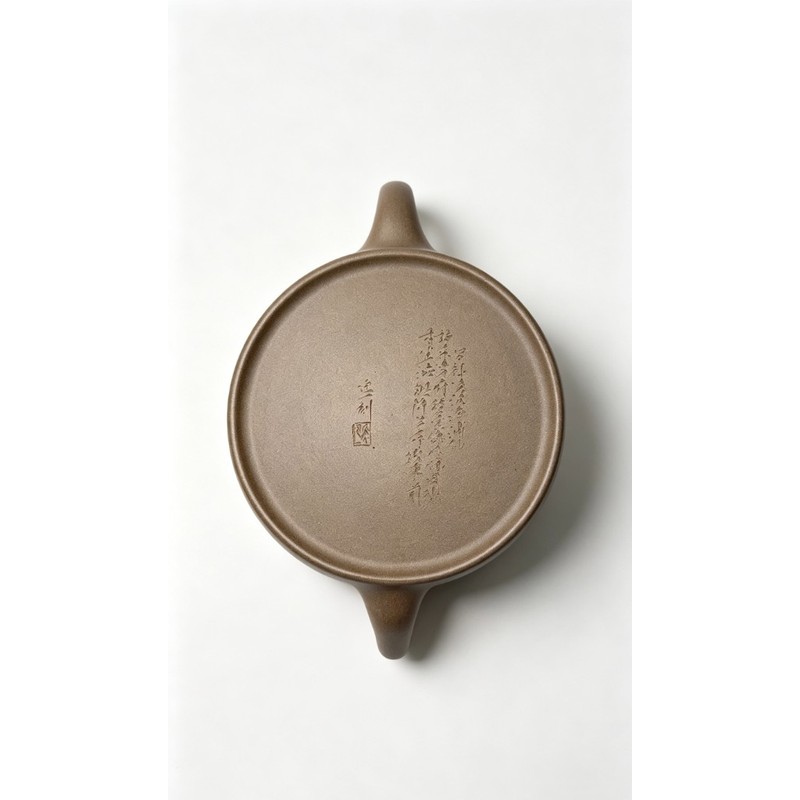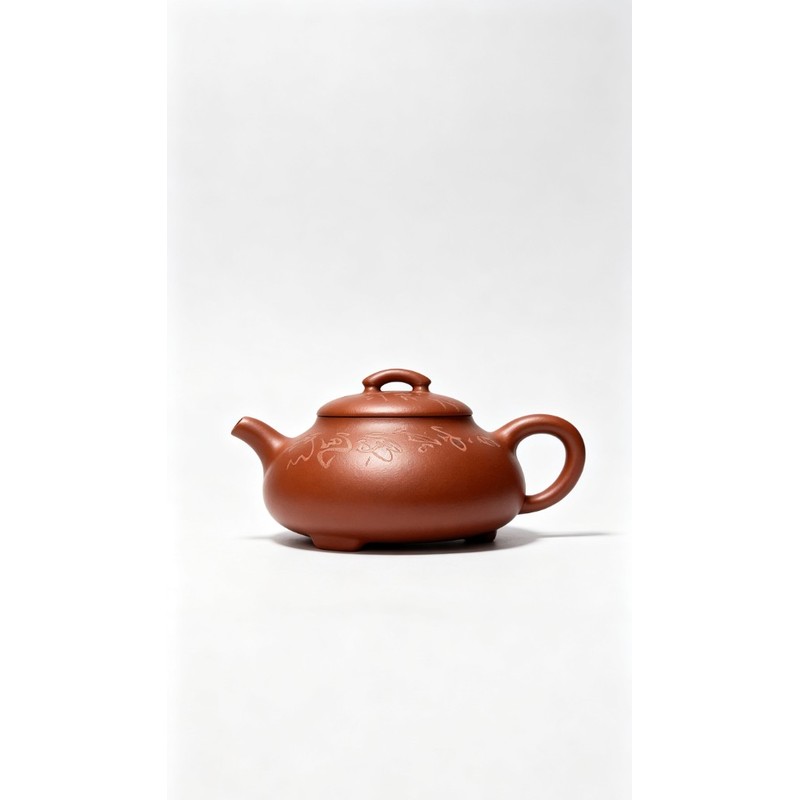
Classic Round Teapot

经典圆壶 · 手工紫砂
$188 $240

The Classic Round (经典圆壶) is one of the most enduring forms in the Zisha canon. Its smooth, sphere-like body maximises heat retention while the engraved bamboo motif — a symbol of uprightness — is carved by hand after the body has dried to leather-hardness.

Ships with a certificate of authenticity, signed by the artisan, and a clay-type verification card.

About This Teapot

The Classic Round Teapot is a cornerstone of the Yixing Zisha tradition. Its perfectly proportioned spherical body, balanced handle, and straight-cut spout represent centuries of refinement toward a single ideal: a pot that disappears into the ritual of tea.

Shaped entirely by hand using the traditional paddle-and-anvil method — never wheel-thrown or mold-cast — every surface bears the subtle marks of human craft. The artist's seal is stamped into the base, and a secondary seal on the interior of the lid uniquely identifies the maker.

The engraved bamboo motif wrapping the body is brushed on in iron oxide before firing, then carved with a bamboo knife to reveal the lighter clay beneath — a technique called 阴刻 (yīn kè, intaglio carving).

Zisha Clay — 紫砂泥

Our teapots are made exclusively from ore mined at the Huanglongshan deposit in Yixing, Jiangsu Province — the world's only known source of authentic Zisha clay. The ore is crushed, sieved, and aged naturally for at least one year before being worked by hand.

  • Purple Clay (Zini 紫泥): The most classic variety — dark reddish-brown with a fine texture. High iron content promotes even heat distribution and a patina that deepens with use.
  • Red Clay (Hongni 红泥): A lighter, more porous clay that fires to warm terracotta tones. Particularly suited to lighter oolongs and white teas.
  • Beige Clay (Duanni 缎泥): A mixed mineral clay that fires to pale buff or yellow. Its lower density enhances aromatic clarity, ideal for aged puerh and high-fired oolongs.

No colorants, chemicals, or blending clays are ever used. What you see is pure Zisha.

How This Teapot Was Made

Each Classic Round passes through eight stages of handwork:

  • Clay preparation: Raw ore is crushed, sieved through fine mesh, mixed with water to a firm paste, and aged for months to improve plasticity.
  • Slabbing: The artisan beats the clay into even rectangular slabs using a wooden paddle — no wheel is used at any stage.
  • Body forming: The round body is created by coiling and pressing clay strips inside a rotating wooden holder, then smoothing by hand and rib tool.
  • Spout, handle, and lid: Each element is shaped separately and attached with clay slip at precise angles governed by the artisan's trained eye.
  • Drying: The assembled pot dries slowly in a shaded room for 3–7 days to avoid cracking.
  • Engraving: At leather-hard stage, calligraphy and motifs are carved with bamboo and metal tools.
  • Firing: Fired at 1180°C for approximately 16 hours in an electric kiln (or traditional dragon kiln for special editions).
  • Inspection: The finished pot is tested for water-tightness, lid fit, and pour alignment before being accepted.

Caring for Your Zisha Teapot

A well-cared-for Zisha teapot improves with every use — developing a patina called 包浆 (bāo jiāng) that deepens flavour and enriches the clay's lustre over years of tea ceremony.

  • First use (开壶): Simmer the teapot gently in plain water for 30 minutes to open the pores, then brew two or three pots of the tea you intend to dedicate it to — one tea type per pot is the traditional practice.
  • Daily cleaning: Rinse with hot water only. Never use soap, detergent, or dishwasher — chemicals will block the micro-pores and damage the patina irreversibly.
  • Drying: After use, remove the lid and allow both pot and lid to air-dry completely before storage.
  • Polishing: After pouring tea over the exterior, gently buff with a clean soft cloth (茶巾) while still warm to build the patina.
  • Storage: Store uncovered in a dry, ventilated place away from strong odours. Avoid plastic bags or airtight containers.
  • Handling: Zisha is robust but brittle — avoid thermal shock (cold water into a hot pot) and dropping.