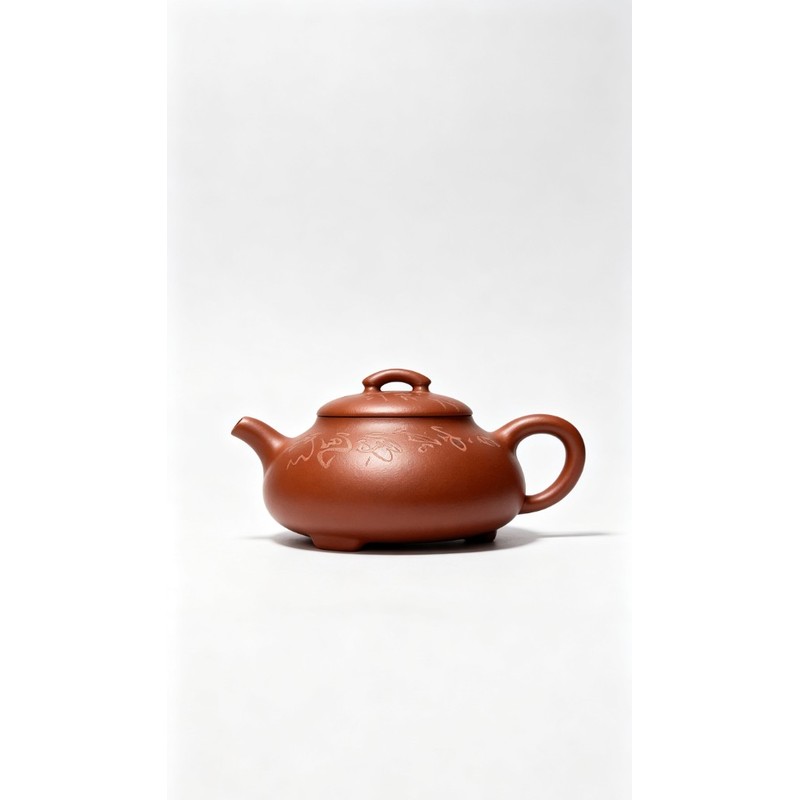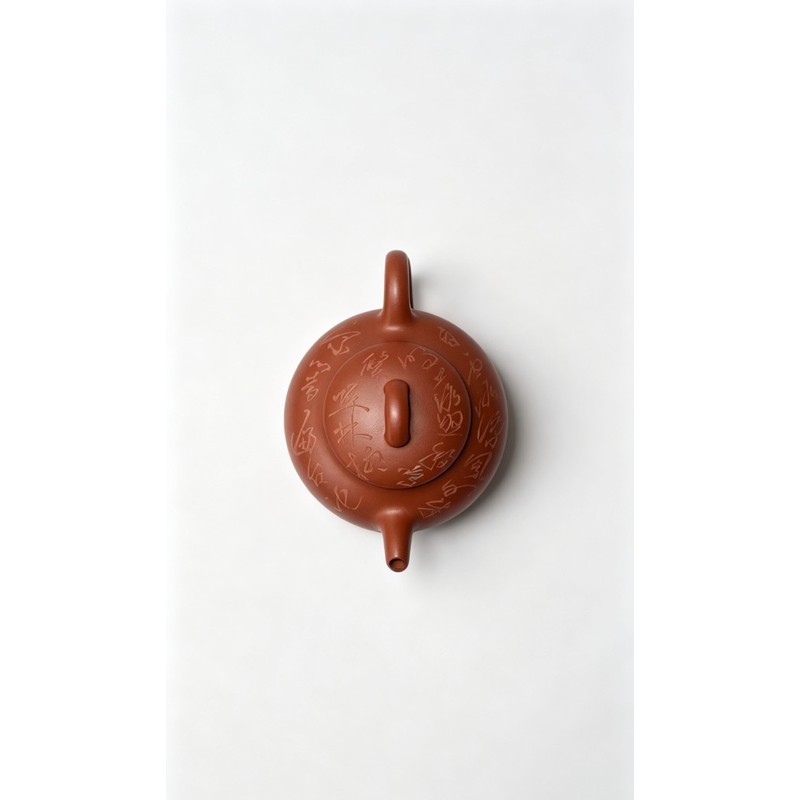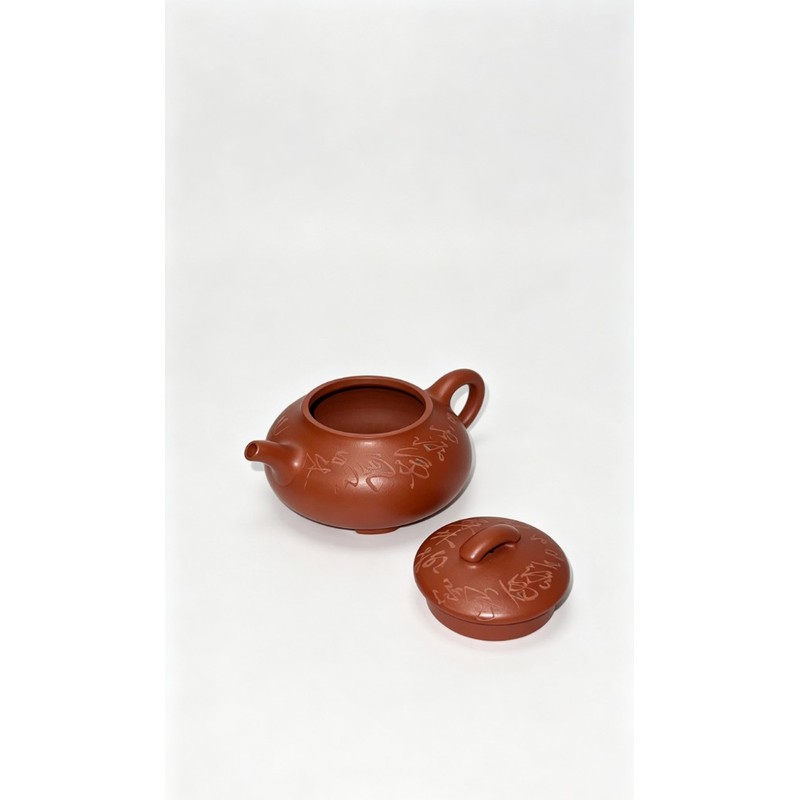
Engraved Three-Foot Teapot · Cicada Verse

咏蝉诗耳把三足壶 · 定一刻绘
$238 / ¥1,680
Weight152 g
Capacity220 cc

Or pay directly with PayPal

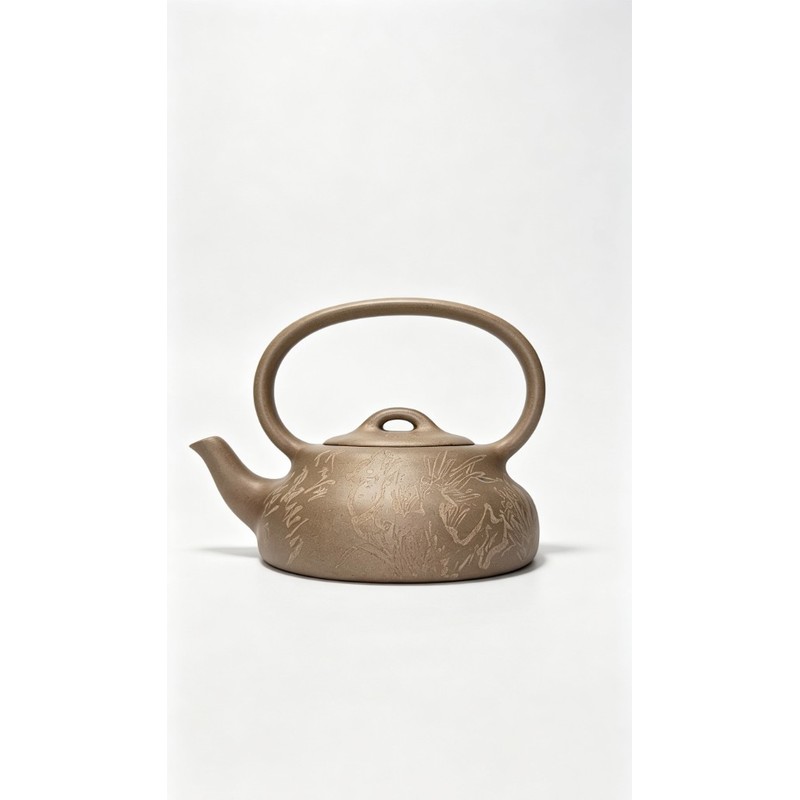
Crafted by a Zhengtang master potter, engraved by Ding Yi with a classical cicada poem. The slightly downward-curving spout ensures a smooth pour; the bridge knob, elegant ear handle, and three-foot base create a harmonious whole.

Master Grade · Ships with certificate of authenticity.

About This Teapot

Body engraving — Cicada poem:

"白露凉风吹,朱明落照移。鸣条噪林柳,流响遍台池。"

This is a classical poem praising cicadas — their song passing from morning through midday to sunset, lingering on the willows like flowing water. The cicada's voice symbolises the passage of time and the need to cherish each moment.

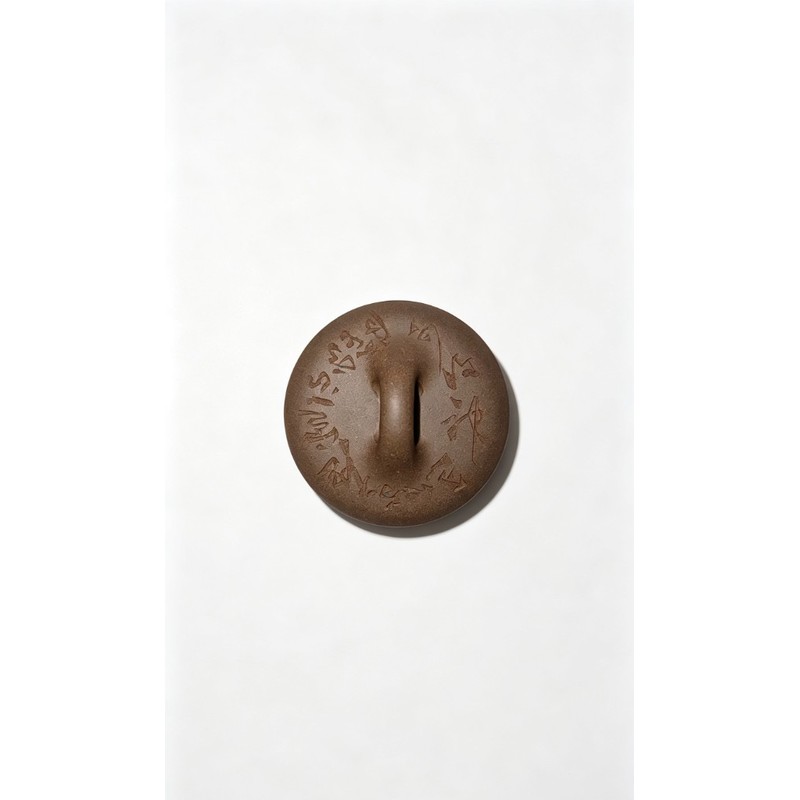
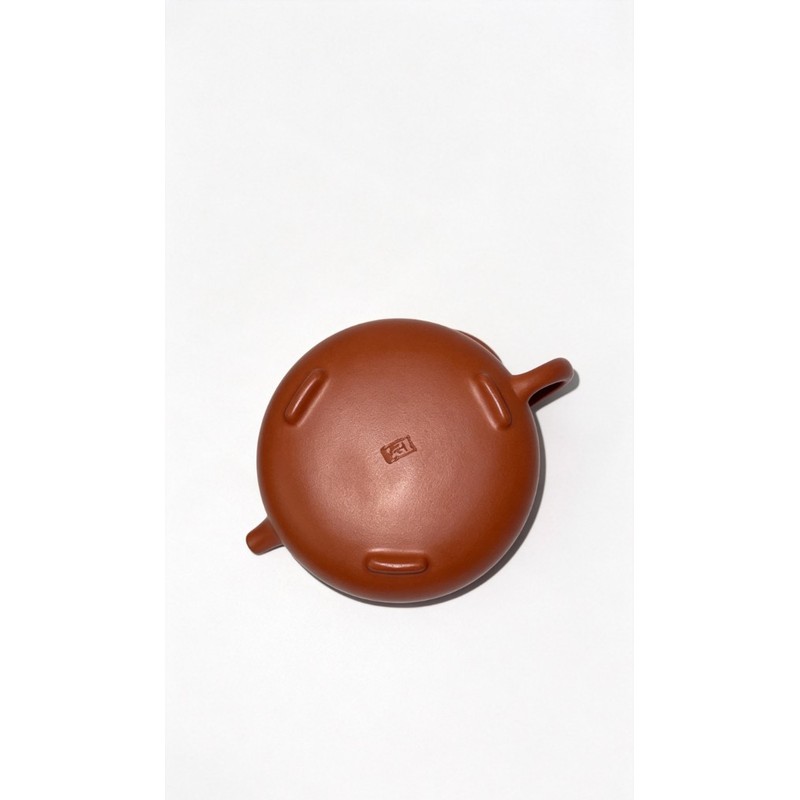
The base features archaic-style engraving with rough, weathered lines that evoke ancient stone and bronze inscriptions — signed with the engraver's mark "定一" (Ding Yi).

Crafted by a Zhengtang master potter. To highlight the form and engraving, the base seal is reserved for the engraver. The spout curves slightly downward for a crisp pour; the bridge knob complements the gracefully arched ear handle, set on three-foot base — a composition of natural harmony.

Zisha Clay — 紫砂泥

Our teapots are made exclusively from ore mined at the Huanglongshan deposit in Yixing, Jiangsu Province — the world's only known source of authentic Zisha clay. The ore is crushed, sieved, and aged naturally for at least one year before being worked by hand.

  • Purple Clay (Zini 紫泥): The most classic variety — dark reddish-brown with a fine texture. High iron content promotes even heat distribution and a patina that deepens with use.
  • Red Clay (Hongni 红泥): A lighter, more porous clay that fires to warm terracotta tones. Particularly suited to lighter oolongs and white teas.
  • Beige Clay (Duanni 缎泥): A mixed mineral clay that fires to pale buff or yellow. Its lower density enhances aromatic clarity, ideal for aged puerh and high-fired oolongs.

No colorants, chemicals, or blending clays are ever used. What you see is pure Zisha.

Form & Engraving

  • Potter — Zhengtang master: Shapes the three-foot body with bridge knob and gracefully arched ear handle.
  • Engraver — Ding Yi (定一): Executes the cicada poem in classical calligraphic style using archaic intaglio technique.
  • Three-foot base: Three small feet elevate the pot, allowing air circulation and adding visual lightness.
  • Downward-curving spout: Engineered for a smooth, controlled pour — a functional detail that complements the overall form.
  • Archaic engraving style: Rough, weathered lines on the base evoke the patina of ancient stone rubbings and bronze inscriptions.

Caring for Your Zisha Teapot

A well-cared-for Zisha teapot improves with every use — developing a patina called 包浆 (bāo jiāng) that deepens flavour and enriches the clay's lustre over years of tea ceremony.

  • First use (开壶): Simmer the teapot gently in plain water for 30 minutes to open the pores, then brew two or three pots of the tea you intend to dedicate it to — one tea type per pot is the traditional practice.
  • Daily cleaning: Rinse with hot water only. Never use soap, detergent, or dishwasher — chemicals will block the micro-pores and damage the patina irreversibly.
  • Drying: After use, remove the lid and allow both pot and lid to air-dry completely before storage.
  • Polishing: After pouring tea over the exterior, gently buff with a clean soft cloth (茶巾) while still warm to build the patina.
  • Storage: Store uncovered in a dry, ventilated place away from strong odours. Avoid plastic bags or airtight containers.
  • Handling: Zisha is robust but brittle — avoid thermal shock (cold water into a hot pot) and dropping.