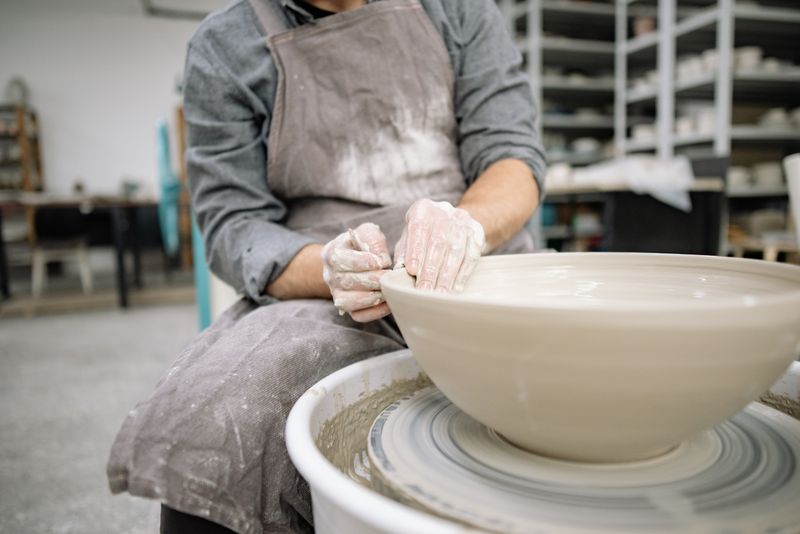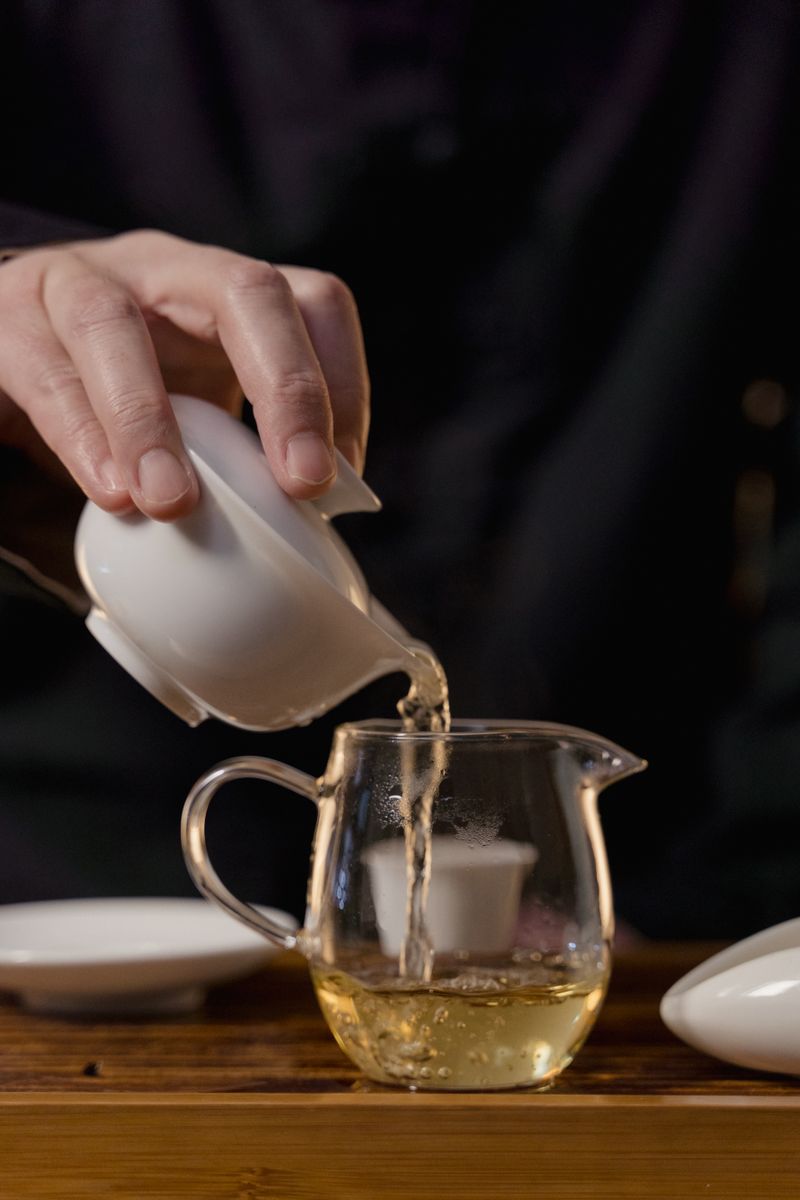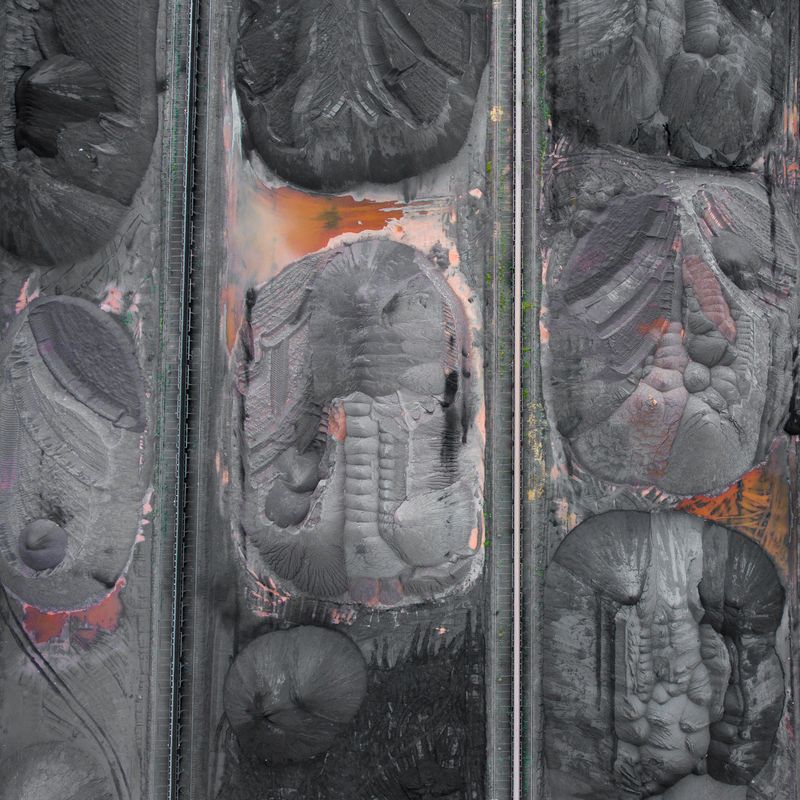
Raw Zisha ore being extracted from the Huanglongshan mine in Yixing, Jiangsu Province — the world's only deposit of authentic Zisha clay
01
Stage One

Mining Clay

选矿取泥

The journey of a Zisha teapot begins deep in the hills of Huanglongshan (黄龙山), just outside Yixing city. This single mountain contains the world's only commercially viable deposit of authentic Zisha ore — a unique co-mingling of iron oxide, silica, alumina, and rare trace minerals that gives the clay its celebrated microporosity.

Our sourcing team selects each batch by hand, examining colour, texture, and mineral consistency. Only ore that meets our strict criteria — no blending, no synthetic additives — is accepted. After extraction, the raw ore is set aside to weather naturally in the open air for six months to a year, allowing the mineral matrix to relax and the clay's plasticity to develop.
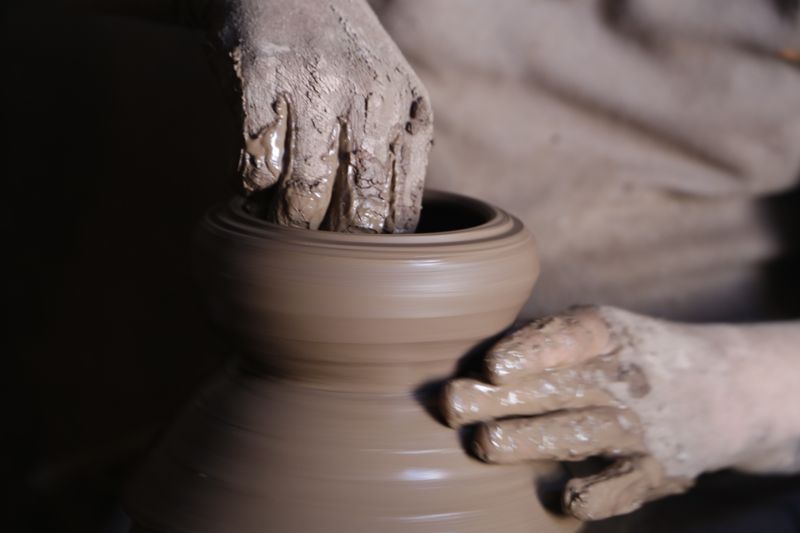
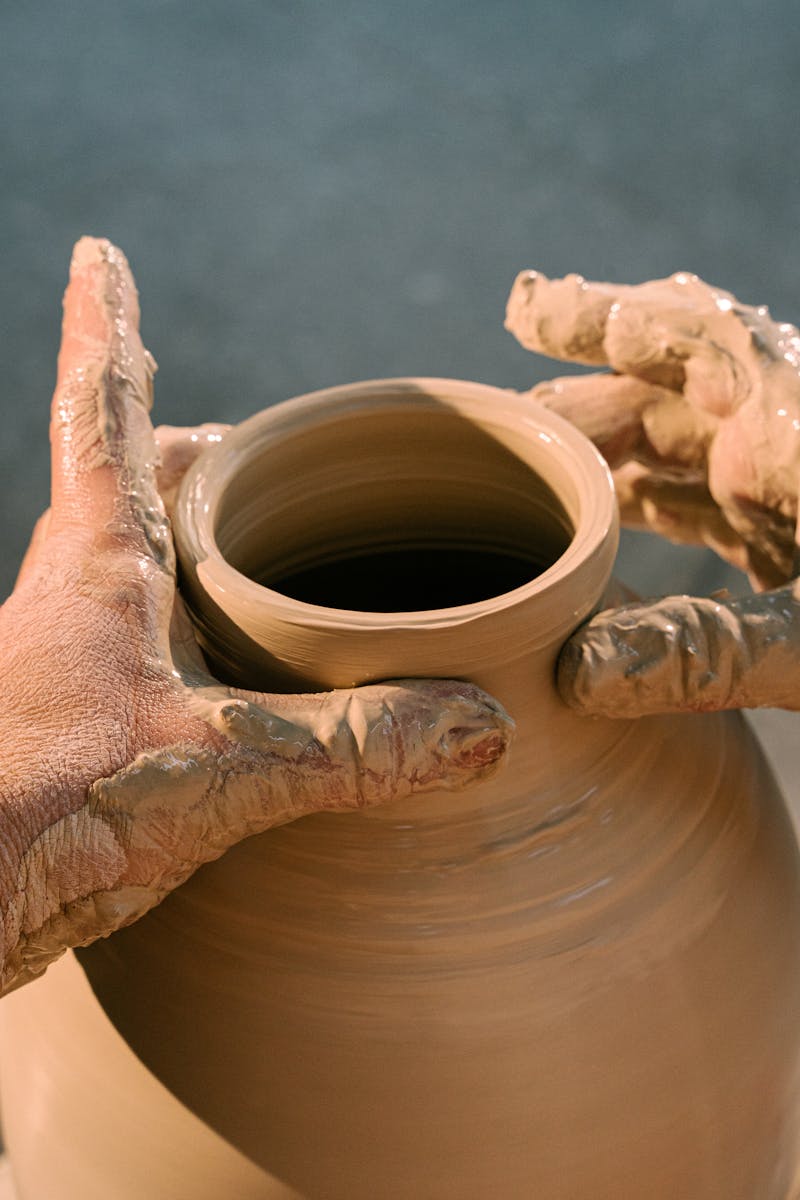
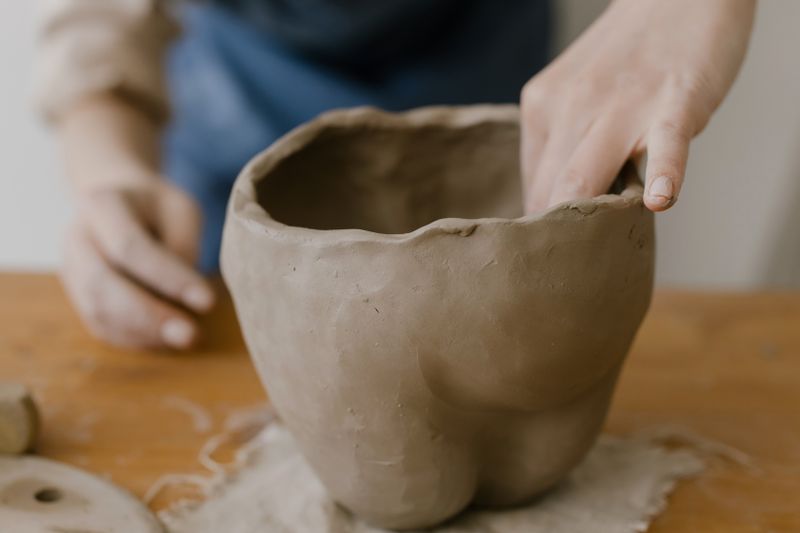
Artisan manually kneading and wedging Zisha clay on a stone workbench to remove air bubbles and achieve uniform consistency
02
Stage Two

Refining Clay

炼泥备料

Weathered ore is crushed using stone rollers, then passed through progressively finer mesh screens until it reaches the desired particle size — typically between 60 and 100 mesh depending on the intended texture of the finished pot. Finer mesh produces a smoother, more refined surface; coarser mesh retains visible mineral grain.

The powdered ore is mixed with water to a firm but pliable consistency, then manually kneaded (手工炼泥) for hours to drive out air pockets and align the clay particles. This rhythmic kneading — pressing, folding, turning — is itself a meditative act. The clay is then wrapped and aged for at least three months before use. Experienced artisans can read a batch of clay by touch alone, detecting the slightest variation in moisture or plasticity.

Artisan beating clay into even rectangular slabs using a wooden paddle on a stone table — the foundational step in traditional Zisha forming
03
Stage Three

Beating Clay Slabs

打泥片成形

Unlike wheel-thrown pottery, authentic Zisha teapots are built from flat clay slabs. The artisan takes a wedge of prepared clay and beats it into an even rectangular sheet using a wooden paddle (木拍子), turning the clay after each strike to ensure uniform thickness. This process — repeated dozens of times — compresses the clay's structure and aligns the mineral particles in a way no machine can replicate.

The slabs are measured and cut using a bamboo ruler and knife to precise dimensions. Even the slightest variation in thickness will cause uneven drying and cracking during firing — so the artisan's eye and palm are the only instruments of measurement that matter. A master can achieve a slab tolerance of half a millimetre without any mechanical aid.

Artisan coiling a clay slab around a wooden rotating holder to form the cylindrical body of a Zisha teapot — the围身 technique
04
Stage Four

Body Forming

围身筒成型

The cut clay slab is curled by hand around a wooden mandrel (木模转盘) to form a cylinder — the foundational structure of the teapot body. The seam is sealed with fresh slip and smoothed seamlessly. The artisan then taps the interior and exterior alternately with wooden paddles and rib tools to push the cylinder into the desired form: round, oval, angular, or pear-shaped.

For round forms like the Classic Round (经典圆壶), the sphere is achieved through a painstaking sequence of interior padding and exterior smoothing — the clay yielding millimetre by millimetre under the artisan's controlled pressure. At no point is a mold used to determine the external shape. The form emerges purely from the artisan's spatial judgment, a skill requiring years of daily practice to develop.

Artisan shaping and attaching the spout, handle, and lid knob to a Zisha teapot body using clay slip and precise hand tools
05
Stage Five

Modelling

捏塑组合

While the body firms to leather-hardness, the artisan separately forms the spout (嘴), handle (把), and lid (盖). Each element is shaped from a single piece of clay — no joining of smaller pieces is permitted in authentic handwork, as such joins would create weak points visible after firing.

The spout is pulled and narrowed to a precise inner diameter, then pierced with a series of tiny holes at its base — a technical refinement that prevents tea leaves from blocking the pour. The handle is shaped to ergonomic proportions that balance the pot when lifted. The lid is thrown separately and fitted to the body opening with tolerances of less than half a millimetre — a tight enough fit to maintain suction, yet loose enough to slide smoothly. All elements are attached using clay slip and allowed to dry as a unified structure before the next stage.

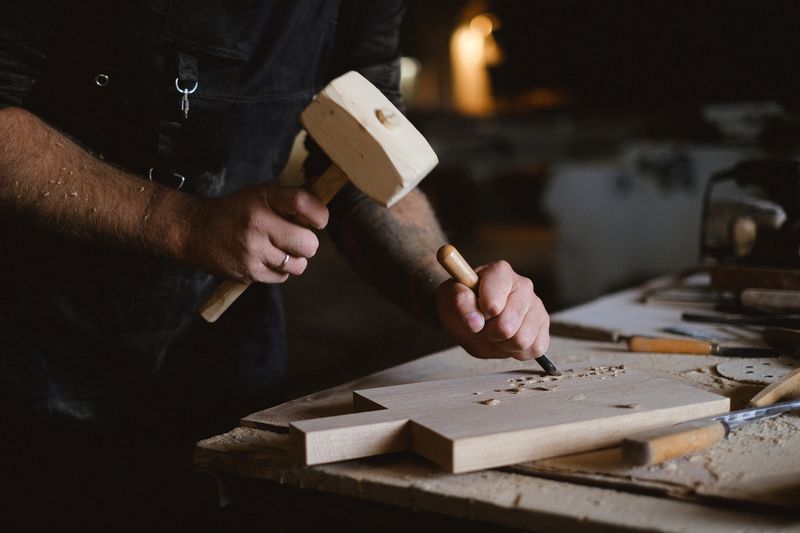
Close-up of a master artisan carving calligraphy into a leather-hard Zisha teapot using a traditional bamboo knife — each stroke irreversible
06
Stage Six

Engraving

刻绘题字

When the assembled pot has dried to leather-hardness — firm enough to hold its shape but not yet fully dry — the engraving artist (刻绘师) takes over. This may be the same artisan who formed the pot, or a specialist who has devoted their career exclusively to the art of clay carving (陶刻).

Working with bamboo knives of various widths, the artist carves calligraphy, poetry, landscapes, or symbolic motifs directly into the clay surface. Each stroke is definitive — there is no erasing, no correcting. The carved lines reveal the lighter raw clay beneath the iron-rich surface, creating a subtle two-tone contrast that deepens after firing. Our artisans draw their imagery from classical Chinese painting traditions, Song Dynasty poetry, and the natural world of Jiangsu's lakes and mountains.

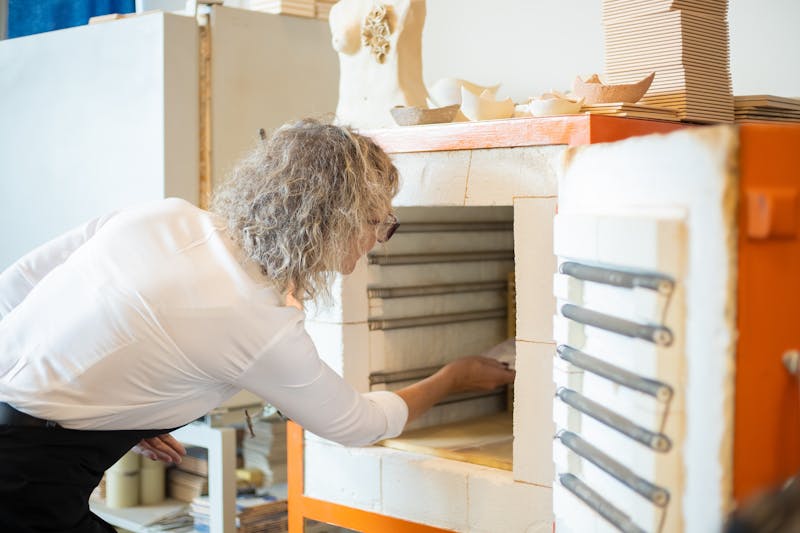
Traditional dragon kiln (龙窑) glowing with heat during the firing of Yixing Zisha teapots at approximately 1180 degrees Celsius
07
Stage Seven

Kiln Firing

龙窑烧制

The assembled, engraved, and fully dried pot enters the kiln for a single firing at approximately 1180°C — no glazing, no multiple firings. Zisha clay requires this precise temperature range: too low and the minerals don't vitrify sufficiently; too high and the clay melts, losing the microporous structure that makes Zisha uniquely suited to brewing tea.

Traditional Zisha firing uses long tunnel-shaped dragon kilns (龙窑) built along hillsides. Fuelled with pine branches and rice straw, they produce a nuanced oxidising atmosphere that brings out the warm mineral tones of the clay. Some of our limited-edition teapots are still fired in a restored dragon kiln outside Yixing — a process requiring 16–18 hours of continuous tending and an intimate knowledge of how flame and draught interact with each clay type.

Master artisan performing the 开壶 ritual — gently simmering a newly fired Zisha teapot in water to open the clay's micro-pores before its first use
08
Stage Eight

Opening the Pot

开壶养壶

After firing and cooling, each pot undergoes final quality inspection: water-tightness, lid precision, spout alignment, and pour quality are all tested and documented. The artisan stamps the base with their personal seal and a Dingyuan authentication mark.

Before a Zisha teapot is ready to brew tea, it must be 开壶 (kāi hú) — "opened." This involves simmering the pot gently in plain water for 30 minutes to clear the pores of any kiln residue, then brewing two or three steeps of the intended tea type to prime the clay. This centuries-old ritual is not superstition — it is sound chemistry. The micropores of the Zisha clay gradually absorb the tea's oils and minerals with each use, eventually building the patina (包浆) that transforms a new pot into a seasoned vessel with its own memory of tea.

Experience the Craft

亲历紫砂之美

Every teapot in our collection carries all eight of these stages within it. Browse our artisans' work and find the pot that speaks to you.

Browse Collections