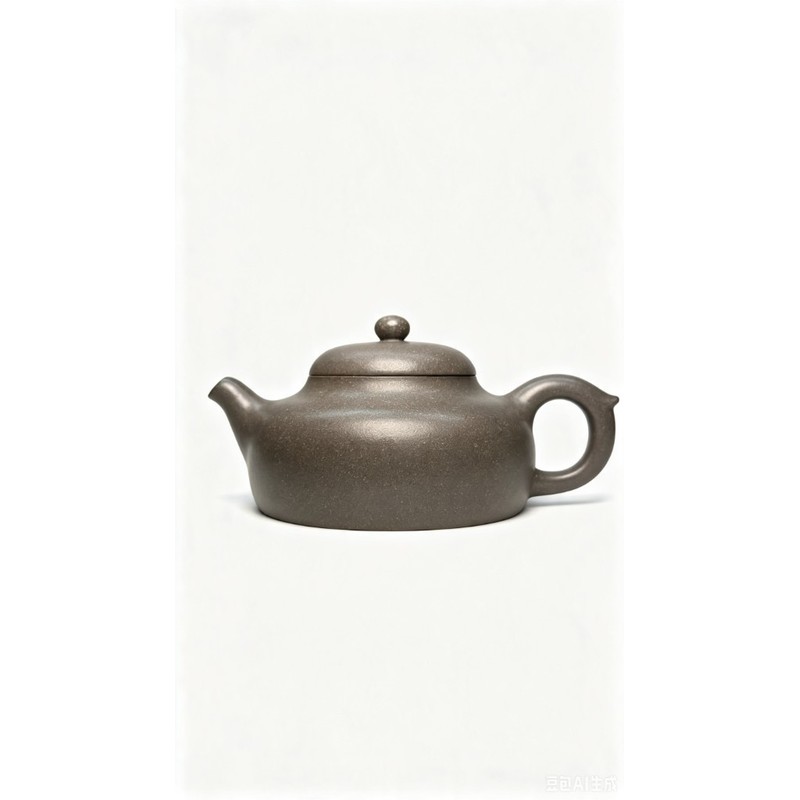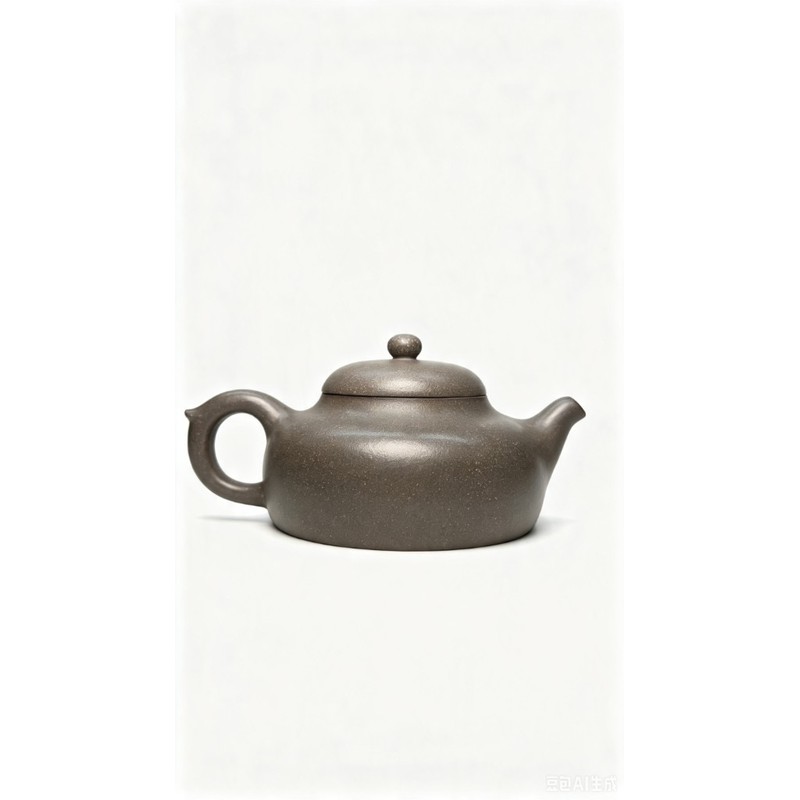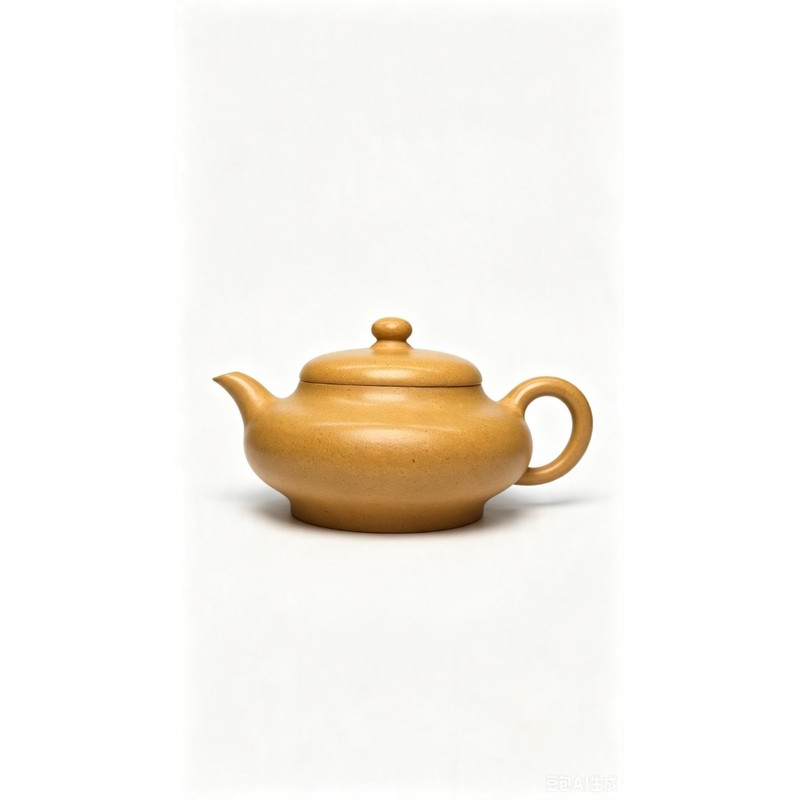
Flat Teapot · Qinghui Duanni · Upturned Handle

宽扁素壶 · 青灰段泥 · 端把款
$238 / ¥1,680
Weight220 g
Capacity190 cc

Or pay directly with PayPal

Refined from Qinghui Duanni clay — cool, elegant tone with rich sandy texture. Wide flat body, plain polished surface.

Daily Collection · Upturned handle spur · Ships worldwide.

About This Teapot

Refined from Qinghui Duanni clay with an elegant, cool, moist tone and rich sandy texture. The belly is wide and flat, steady and grounded. A domed lid with round bead knob; the spout curves softly and the handle tail lifts slightly for a touch of liveliness. Rounded, restrained lines throughout — a plain polished vessel without carving, quiet and composed, balancing grip comfort and visual beauty.

Zisha Clay — 紫砂泥

Our teapots are made exclusively from ore mined at the Huanglongshan deposit in Yixing, Jiangsu Province — the world's only known source of authentic Zisha clay. The ore is crushed, sieved, and aged naturally for at least one year before being worked by hand.

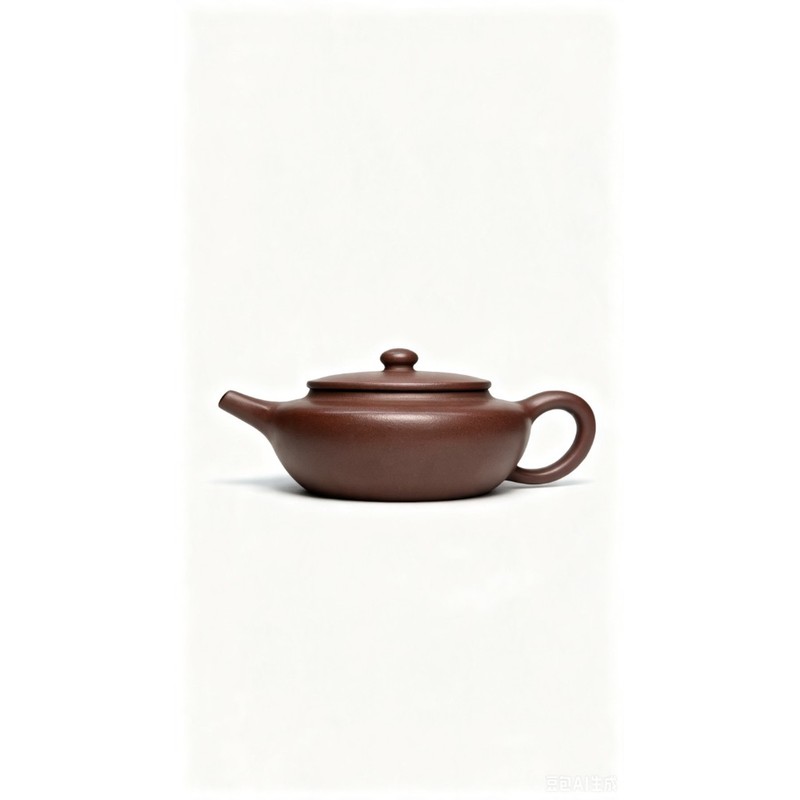
  • Purple Clay (Zini 紫泥): The most classic variety — dark reddish-brown with a fine texture. High iron content promotes even heat distribution and a patina that deepens with use.
  • Red Clay (Hongni 红泥): A lighter, more porous clay that fires to warm terracotta tones. Particularly suited to lighter oolongs and white teas.
  • Beige Clay (Duanni 段泥): A mixed mineral clay that fires to pale buff or yellow. Its lower density enhances aromatic clarity, ideal for aged puerh and high-fired oolongs.

No colorants, chemicals, or blending clays are ever used. What you see is pure Zisha.

Form & Finish

  • Qinghui Duanni clay
  • Wide flat form
  • Plain polished surface
  • Domed lid
  • Round bead knob
  • Upturned handle spur

Caring for Your Zisha Teapot

A well-cared-for Zisha teapot improves with every use — developing a patina called 包浆 (bāo jiàng) that deepens flavour and enriches the clay's lustre over years of tea ceremony.
  • First use (开壶): Simmer the teapot gently in plain water for 30 minutes to open the pores, then brew two or three pots of the tea you intend to dedicate it to — one tea type per pot is the traditional practice.
  • Daily cleaning: Rinse with hot water only. Never use soap, detergent, or dishwasher — chemicals will block the micro-pores and damage the patina irreversibly.
  • Drying: After use, remove the lid and allow both pot and lid to air-dry completely before storage.
  • Polishing: After pouring tea over the exterior, gently buff with a clean soft cloth (茶巾) while still warm to build the patina.
  • Storage: Store uncovered in a dry, ventilated place away from strong odours. Avoid plastic bags or airtight containers.
  • Handling: Zisha is robust but brittle — avoid thermal shock (cold water into a hot pot) and dropping.